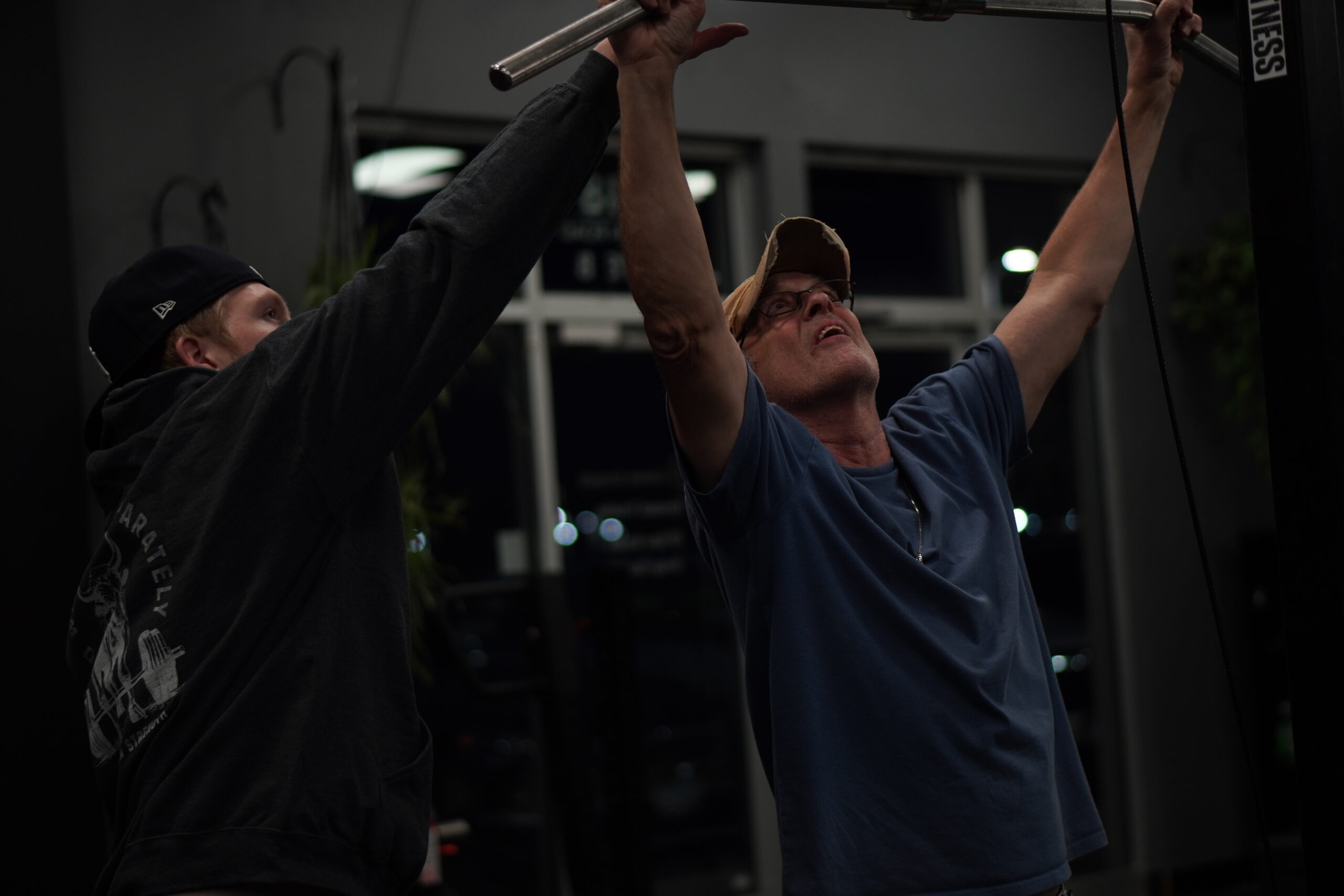
With any activity, there is inherent risk. This is a fact of life, and strength training is no different. However, the risk of injury while strength training is the same at any age, but the reward of strength training as a senior far outweighs any of the risks. Here are the most notable benefits: increased bone density, skeletal muscle mass, muscle strength, muscle power, tendon strength, ligament strength, blood flow, balance, confidence, gait speed, gait mechanics, and cardiorespiratory function. This leads to a more active life, better social connections, decreased fall risk, a more robust immune system, and, most importantly, increases your life span and quality of life. This all seems like a fair trade-off for the risk of a pulled muscle, sore knees, or even a pinched nerve.
Before we get any further, let’s talk about what an injury or discomfort might look like in the context of strength training and daily living because pain, injury, and function are all different things. You can have pain without injury, loss of function without injury or pain, or worse, all three—pain, injury, and loss of function—but this is the least common outcome.
In the beginning of a properly loaded strength training program, you should expect some level of joint discomfort. Your joint tissues get inflamed and angry just like muscles get sore from lifting weights. This is part of the process of your joints getting strong. Good news because this doesn’t last forever. It may last for months, but not forever. After 6 months of proper strength training, most people’s joints feel better than before they started. This same principle applies to your muscles. They might ache, and that’s okay. They are adapting to your new activity. Give them time. That pretty much sums up discomfort. Achy bones and muscles are not an injury, and it’s likely that they won’t impact function much, but be careful what you tell yourself about your function. I had a tricky client (his relationship with pain) tell me that he “couldn’t get out of bed.” I asked him if he went to work that day. He looked confused and said, “yes.” Seems like he got out of bed then, right? The things we say matter. This person was dealing with chronic pain before he started strength training. It eventually got better than when he started, but the process takes time.
Sometimes, discomfort or injury will impact function, but most of it is perceived function. If you strain a muscle in your neck, it might be difficult to put on a t-shirt or wipe down the kitchen counters, but only for a short time. Muscles (especially ones that are strength training) recover relatively quickly from strains. Even for seniors. You are more resilient than you think. Muscle strains can be alarming when they happen. You might feel a ripping sensation, hear a pop, or feel like it’s the end of the world. Just remember, these sensations don’t always match the severity of the strain. Stay optimistic and keep moving. Discomfort is expected when starting an effective strength training program; thankfully, muscle strains are not common, but they can happen. Even people that don’t strength train strain muscles all the time. Strength training, education, and optimism help with a speedy recovery.
We’ve touched on function a bit, but it deserves its own section. Function is partly measurable and mostly subjective. People with no legs have climbed mountains. People with the most extreme setbacks have figured out how to do incredible things. That’s all for function.
I’ll leave you with a snippet you can share with your friends. The benefits of strength training for seniors outweigh the risks by a massive margin. It’s one of the safest investments you can make.

No responses yet